EMC Basics

This catalog summarizes the basic concepts related to electromagnetic compatibility prepared by our company, including relevant terminology and definitions, as well as some common basic knowledge points. For more information, click on the titles of the articles below.

The following study materials are currently categorized:

Total number of published study materials in current category: 15; Total number of materials in current page: 8.

Conversion formula for electric and magnetic fields

Conversion formula for electric and magnetic fields

The electric and magnetic field conversion formula using the free-space wave impedance of 377Ω applies only to far-field plane waves (EMC radiated nuisance, antenna far-field), and is not available for the near-field (coils, IF magnetic fields, near-field probes, near areas of shielded chambers). 377Ω ...

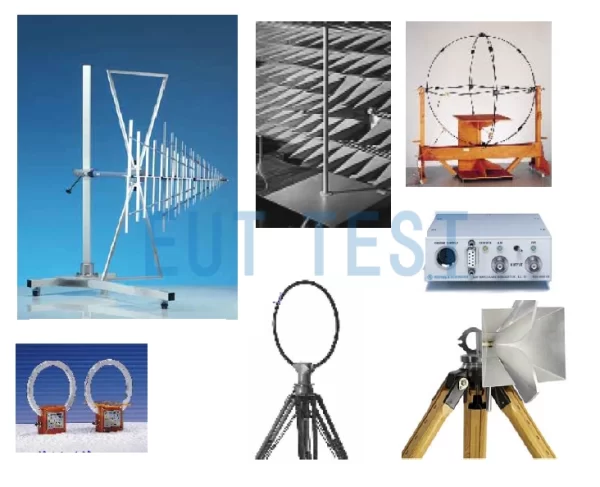
Introduction to the classification and principles of EMC antennas

Introduction to the classification and principles of EMC antennas

What is an EMC antenna called?EMC antenna stands for Electromagnetic Compatibility Test Antenna and can also be referred to as an EMC measurement and test antenna. This article describes the common antenna classifications in the EMC testing industry, the different antenna types, and explains how they...

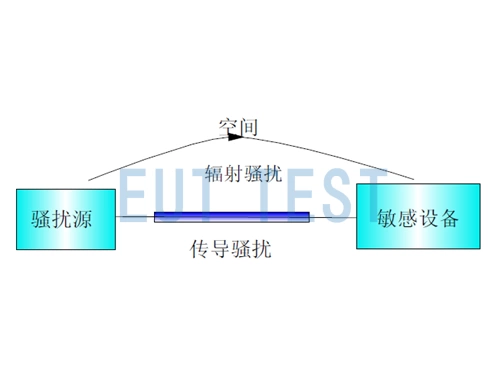
Electromagnetic nuisance coupling mode - conducted and radiated nuisance

Electromagnetic nuisance coupling mode - conducted and radiated nuisance

The coupling mechanism of electromagnetic harassment is usually categorized into two main types: propagation by conducted harassment and propagation by radiated harassment. Electromagnetic harassment propagated through conductors is called conducted harassment; electromagnetic harassment propagated through space is called radiated harassment. Here's how to learn about conducted nuisance...

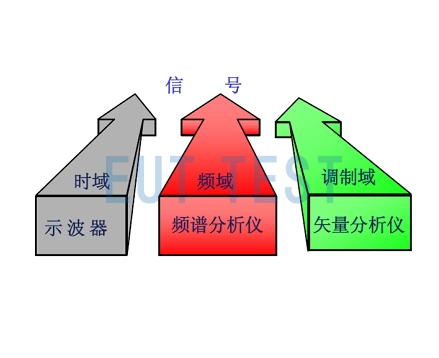
Understanding Time Domain Signals - Frequency Domain Signals - Modulation Domain Signals in One Article

Understanding Time Domain Signals - Frequency Domain Signals - Modulation Domain Signals in One Article

Time-domain signals record the waveform information of the signal, which can be tested with an oscilloscope; frequency-domain signals record the frequency distribution information of the signal, which can be tested with a spectrometer; modulated signals are divided into analog, digital, noise, and distortion modulated signals.

EMC Test Program Introduction

EMC Test Program Introduction

EMC electromagnetic compatibility testing is the testing of equipment according to the methods specified in the relevant electromagnetic compatibility standards to assess whether it meets the standard requirements. The EMC performance of the product must meet the standard requirements before finalizing and entering the market. Here's a look at common...

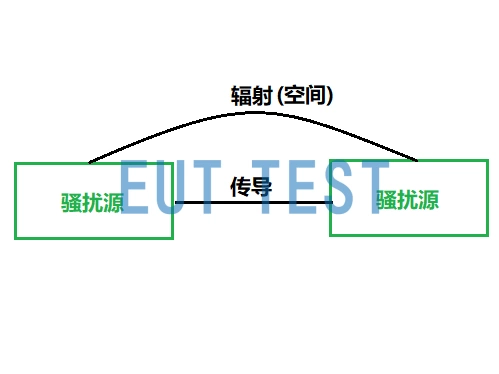
EMC Sources and Differences between Conducted and Radiated EMI

EMC Sources and Differences between Conducted and Radiated EMI

When we design prototypes or use development boards, EMI electromagnetic interference is usually negligible. However, in real-life electronic devices and systems, EMI is an important topic and it is the responsibility of the hardware development engineer to find EMI EMI production...

Reasons for EMI Electromagnetic Interference

Reasons for EMI Electromagnetic Interference

EMI is a common problem that needs to be solved in products in various industries such as, for example, military, defense, communication systems, electrical and aerospace, home appliances, and so on. So how to prevent EMI electromagnetic interference has become the hottest issue in the hardware development industry today...

Introduction to Very Low Frequency ELF Electric and Magnetic Fields

Introduction to Very Low Frequency ELF Electric and Magnetic Fields

Extremely low frequency (ELF) electric and magnetic fields (EMFs) occupy the lower portion of the electromagnetic spectrum in the frequency range 0-3000 Hz.ELF EMFs are generated by charged particles. Artificial sources are the main source of very low frequency EMFs...