I. SAE Automotive Electronics EMC Core Standards List (2026-03 Update)
Automotive electronics electromagnetic compatibility (EMC) is to ensure the stable operation of on-board electronic equipment, to avoid electromagnetic interference of the core technical indicators, SAE International (Society of Automotive Engineers International) EMC standards issued by the North American and even the global automotive electronics industry is an important reference point. The following is a list of the latest updated and valid SAE automotive electronics EMC test standards in 2026, synchronized with the corresponding ISO standards, to facilitate EMC practitioners to the standard reference.
- J1113 (Automotive Electronics EMC)
- J551 (whole vehicle EMI/EMS)
- J1752 (IC EMC)
“Reminder: swipe tables left and right” Standard name
Effective/stabilization time
Corresponding ISO standard number
Corresponding to Chinese standards
EMC Measurement Procedures and Limits for Vehicles, Marine and Mechanical Components (excluding Aircraft) (16.6Hz-18GHz)
2023-04
GB/T 33014.2
Power Line Conducted Transient Immunity Testing
2018-12
ISO 7637-2
GB/T 21437.2
Unsupplied line conductive coupling and capacitive/inductive coupling immunity
2022-09
GB/T 33014.4
ESD Electrostatic Discharge Immunity Test Program for Automotive Components
2015-02
GB/T 19951
Radiated electromagnetic field immunity of automotive parts (reverberation chamber method)
2023-03
ISO 11452-10
GB/T 33014.10
Classification of performance status after EMC immunity testing
2018-09
ISO 16750-2
GB/T 28046.2
Vehicle Electromagnetic Interference (EMI) & Immunity (EMS) Testing
currently in force
GB/T 18655
Integrated Circuit EMC Measurement Program
2021-11
ISO 10605, IEC 61967 series
GB/T 44937
GB/T 42968
Second, the core SAE automotive electronics EMC standard test program brief introduction
“Reminder: swipe tables left and right” The standard is the SAE automotive electronics EMC basic core standards, covering a wide frequency band of 16.6Hz-18GHz, the core test items include parts voltage transient immunity, audio and radio frequency immunity, conducted emissions and radiated emissions test, unified automotive electronics EMC basic test process and limit value requirements, is the general outline of other sub-division of the EMC standard, the subsequent sub-division of the standard are around its framework. Subsequent substandards are centered around its framework.
Focusing on the automotive power line conducted transient immunity test, for the automotive electronic equipment in the vehicle start-stop, voltage fluctuations and other scenarios, the ability to resist the power line conducted transient interference, clear test waveforms, imposition methods and determination criteria, fit the actual working conditions of the automotive power supply circuit, to ensure that the electronic equipment in the power transient normal operation.
For non-powered lines
conductive interferenceThe test focuses on detecting the capacitive coupling and inductive coupling immunity performance of signal lines, control lines and other non-powered lines, avoiding the crosstalk problem when the vehicle is densely arranged with multiple wiring harnesses, and standardizing the electromagnetic coupling test methods and qualification conditions for non-powered lines.
single-mindedly devoted to
ESD Electrostatic Discharge Immunity for Automotive ComponentsThe test covers the two working conditions of energized work and packaging and handling of parts, and stipulates the calibration of electrostatic discharge simulator, test voltage level, discharge mode and other core contents, so as to prevent the failure of in-vehicle electronic devices caused by electrostatic breakdown and interference, which is a mandatory inspection item for the mass-production test of in-vehicle parts and components.
Adopting reverberation chamber method to carry out radiated electromagnetic field immunity test for automotive parts, compared with the traditional test method, the test efficiency is higher, the frequency band coverage is wider, and it is suitable for the radiation immunity test of complex automotive electronic parts, and it standardizes the test setup, field strength calibration and result determination process in the environment of reverberation chamber.
The core for EMC immunity test functional performance grading standards, not to carry out a separate special test, but to unify the various types of immunity tests in the determination of the functional state of the equipment standards, divided into different performance levels, to solve the problem of inconsistent results in different test scenarios, to provide a unified basis for the evaluation of EMC test results.
EMC test standards for the vehicle level, divided into electromagnetic harassment (EMI) and electromagnetic immunity (EMS) two plates, the test items cover the vehicle radiated emissions, conducted emissions, vehicle radiation immunity, magnetic field immunity, etc., to ensure that the vehicle in the electromagnetic environment does not interfere with external equipment, but also to resist external electromagnetic interference.
Specialized EMC test standards for in-vehicle integrated circuits, covering IC radiated emission, conducted emission, electrostatic immunity and other test items, focusing on chip-level EMC performance, adapting to the high-precision, high-reliability testing needs of in-vehicle chips, and providing technical references for the research and development of in-vehicle chips and their selection.
Summary:
In this paper, only a brief overview of the SAE EMC standard core test items, click on the standard number to understand each standard test principles, test procedures, practical points, supporting illustrations and other details, to help automotive electronics R & D, test personnel to accurately grasp the requirements of the standard, and efficiently carry out EMC test work.


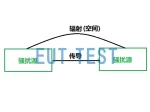 EMC Test Program Introduction