
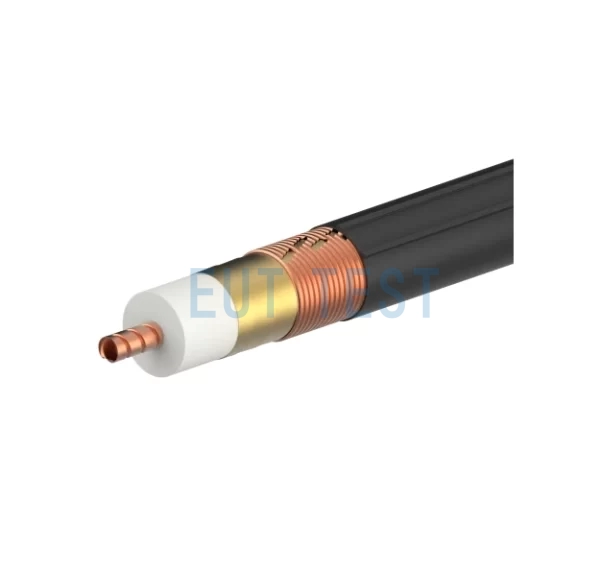
Introduction:
50-ohm RF coaxial cable is the most essential transmission line in RF (radio frequency), microwave communications, EMC (electromagnetic compatibility) RF testing, antenna transmission, 4G/5G base stations, Wi-Fi networks, and other RF applications. Furthermore, different countries have different standards and naming conventions for these cables. Below, we’ll explore the product naming standards for 50-ohm RF coaxial cables in different countries. Since the test equipment provided by EUTTEST is designed for 50-ohm RF testing applications, we will not cover 75-ohm coaxial cables at this time.
Learn more:RF Cable Basics
Chinese National Standard SYV / SYWV Series
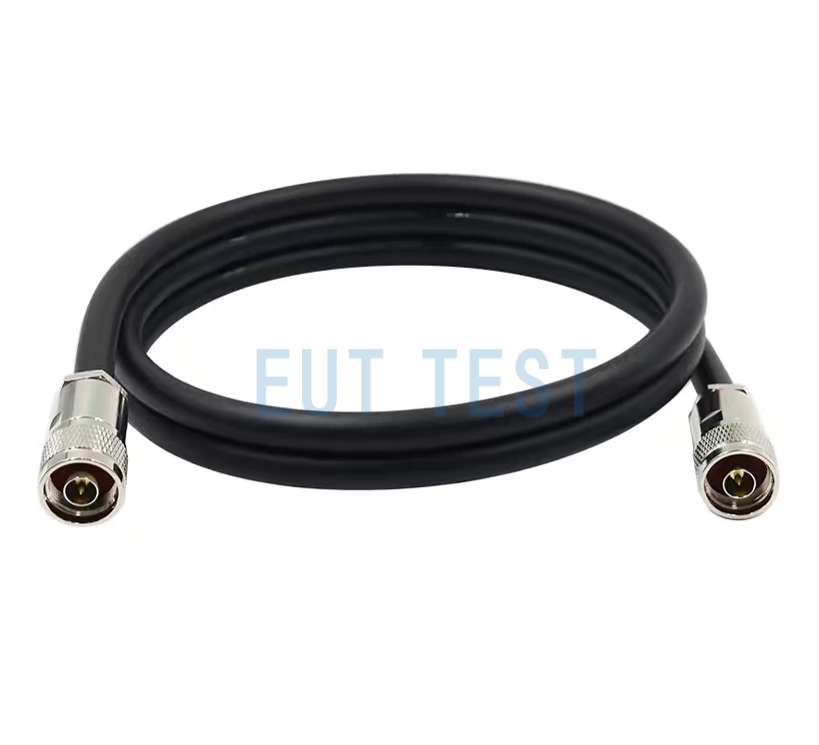
Chinese National Standard SYV / SYWV Series 50-ohm Coaxial Cables
S = RF coaxial (She Pin); Y = polyethylene insulation; V = solid; W = physically foamed.
50 = 50-ohm impedance; number = outer diameter of the insulation.
Common Models and Product Features of SYV / SYWV Series Coaxial Cables:
Please note that within the domestic industry, the leading English letters may be omitted when referring to these products; for example, the SYV-50-3 is commonly referred to as the 50-3 cable.
“Reminder: swipe tables left and right”U.S. Military Standard System: “RG” Series
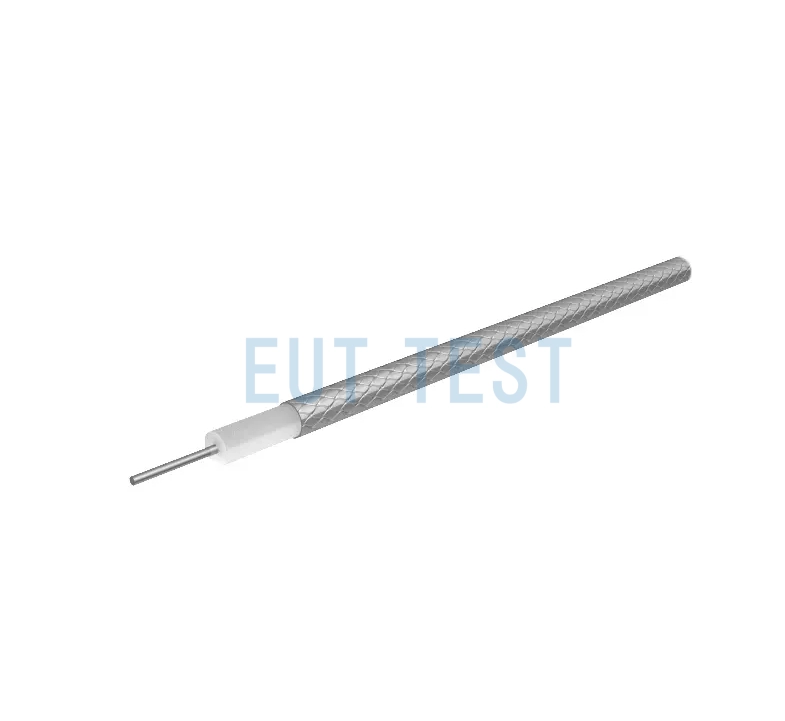
RG Series Coaxial Cable (U.S.)
For historical reasons, the RG series once included thousands of models, but today only a relatively small number of them are still in mass production and widely used in commercial and industrial communications.
“Reminder: swipe tables left and right”(RG = Radio Guide, U = Universal)
Common Models and Product Features of RG Series Coaxial Cables:
“Reminder: swipe tables left and right”Teflon-insulated, high-temperature resistant, ultra-fine
Ultra-fine/Micro Wires (Internal Equipment Jumpers)
Same as above, with a slightly different sheath material
Ultra-fine/Micro Wires (Internal Equipment Jumpers)
Solid PE—the most common type of standard patch cord
Fine thread
Teflon-insulated, silver-plated copper wire—the ultimate solution for high-frequency and high-temperature applications—the top choice for customers in the defense industry or precision instrument sectors.
Fine thread
Solid PE—inexpensive and the most cost-effective low-frequency communication cable.
Soft Wire
Double-layer silver-plated shielding, providing far superior shielding performance than RG58
Soft Wire
Teflon insulation + dual-layer shielding; internal core patch cables for base station equipment (RG400 features a multi-strand inner conductor, making it more flexible)
Soft Wire
A scaled-down version of the RG8, with foam insulation
Early large-scale radio cables have now largely been replaced by RG213.
Solid PE, single-layer copper braid, the go-to choice for marine and walkie-talkie outdoor antennas
PE core, double-layer silver-plated copper braiding, extremely high resistance to interference, used in high-performance military radar systems. Similar products include the 10.8mm Type 10172 cable.
Teflon insulation + Teflon jacket, aerospace-grade thick wire
The table above does not represent all RG-compatible cables; it lists only common models.
Global Commercial Low-Loss LMR Series
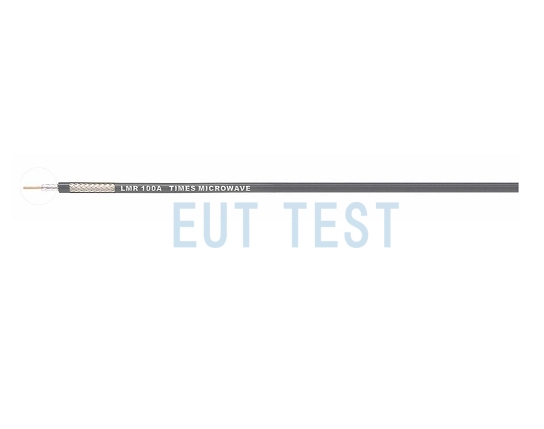
LMR Coaxial Cable
FAA FAR 25
Suffixes: `-FR` (flame-retardant), `-DB` (direct-burial, waterproof), `-UF` (ultra-flexible, multi-strand inner conductor).
Common Models and Product Features of LMR Coaxial Cables:
“Reminder: swipe tables left and right”A perfect replacement for RG-174 and RG-316 (at room temperature), with lower loss.
Small Jumper Wires
Models specifically designed to be fully compatible with RG-58 connectors, with loss significantly lower than that of RG-58.
Soft Wire
It offers slightly better performance than the LMR195 and is currently the most commonly used extension cable for routers and IoT antennas.
Soft Wire
Offering the perfect balance of flexibility and low loss, it is the top choice for outdoor patch cords used at medium and short distances.
Soft Wire
A transitional model that falls between fine and thick lines.
Soft Wire
Extremely low loss; standard equipment for outdoor base stations and large antennas; can replace RG213
The trunk line from the top of the cell tower to the equipment room.
Extra-Large Trunk Lines (Hard-Wire Type)
The table above does not represent all LMR cables available; it lists only common models.
Japan/Asia-Pacific D Series
The first number represents the outer diameter of the insulation; the larger the number, the thicker the wire. `2V` refers to the old solid-core standard, `FB` refers to the foamed low-loss standard, and `SFA` refers to the ultra-low-loss standard (typically using aluminum wire).
“Reminder: swipe tables left and right”D = 50 ohms (if C, then 75 ohms)
2V = Solid PE insulation + single-layer braid + PVC outer jacket
FB = Foamed PE insulation (F) + aluminum foil and braided double shielding (B)
The first number represents the outer diameter of the insulator; the larger the number, the thicker the wire. “2V” refers to the old solid-core standard, `FB` refers to the foamed low-loss standard, and “SFA” refers to the ultra-low-loss standard (typically using aluminum wire).
Common Models and Product Features of D-Series Coaxial Cables:
“Reminder: swipe tables left and right”Challenges in Model Selection:
In actual business communications, even after learning about the different cable types and standards from various countries, most customers are still unsure how to make a selection. This is because they typically only know the required cable diameter or the frequency range in which the cable will operate, and are at a loss as to where to begin when faced with such a wide variety of cable types and models.
If you encounter any of the above issues, you can click on the product model links above; we will continue to update this page with relevant products. Alternatively, you can contact EUTTEST directly. We’ll provide technical specifications and recommend a suitable 50-ohm coaxial cable. You can also refer to the comparison table below for preliminary selection guidance. Please note that the recommendations below are for reference only; when making your final selection, you should also consider various factors such as cost, power, and attenuation.
Main Selection Methods:
“Reminder: swipe tables left and right”RG-316 (High-Temperature Resistant)
LMR-100
1.5D-2V
SYV-50-2
RG-142 (耐高温双屏蔽)
LMR-195
LMR-200 (首选)
3D-2V (低频)
3D-FB (高频)
SYV-50-3 (低频)
SYWV-50-3 (高频)
中距离传输(10-20米)
RG-223 (双屏蔽细线)
LMR-240 (极佳)
LMR-300
5D-FB
5D-SFA
SYWV-50-5
远距离传输(20-50米)
RG-214 (双屏蔽抗干扰)
LMR-400
8D-FB
8D-SFA
SYWV-50-7
超长距离(>50米)
LMR-600
10D-FB
12D-FB
SYWV-50-9
SYWV-50-12
其他选型方法:
“Reminder: swipe tables left and right”日韩/台湾/东南亚客户: 大量使用 D系列 (3D/5D/8D) ,他们采购的接头也是适配 D 系列线径的。
国内内销工程: 为了拼成本,大量使用 SYV / SYWV 。需要注意的是,国内的 SYWV-50-3 尺寸有时与国际标准的接头压接管不能完美匹配,施工时需要专用接头。
 RF Adapters & RF Connectors Basic Knowledge Popularization