
The IEC 60747-17 standard for safety certification test programs for digital isolators includes the following key categories, covering electrical performance, insulation characteristics and long-term reliability verification:
Basic electrical performance immunity test
Common-mode transient immunity (CMTI): Evaluates a device's ability to maintain signal integrity under high-voltage common-mode noise disturbances, and consists of static tests (applying fixed high-voltage disturbances) and dynamic tests (simulating transient disturbances).
We tested CMTI performance this way:
- Static test: Continuous application of 1000V high voltage interference
- Dynamic test: simulation of 50kV/μs transient interference
- Qualification standard: signal distortion must be <5%
Signal transmission check
Signal transmission characteristics: verify the timing accuracy, power consumption and anti-jamming ability of signal transmission on both sides of the barrier.
Focus on three indicators:
- Transmission delay: <10ns typical
- Power consumption: operating current <1mA
- Anti-interference: no error code under 30V/ns interference
High voltage insulation safety test
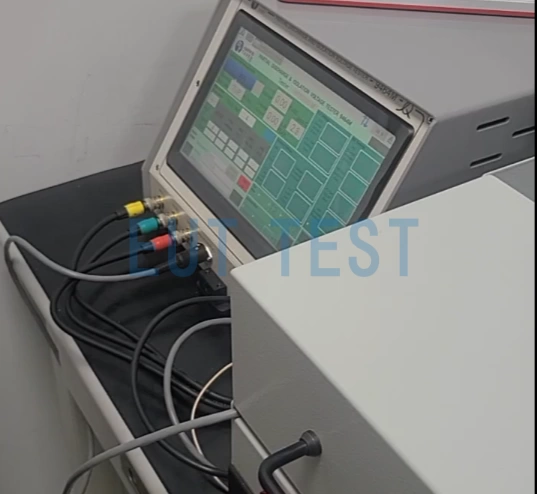
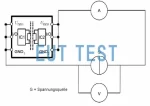
Testing Partial Discharge Performance of Digital Isolators with the HT 9464M
IEC 60747-17 Three mandatory experiments:
- DTI Detection: Inspection of the insulation layer with a microscope, which requires uniform thickness and no air bubbles, and assessment of the dielectric quality of the thin layer (e.g. material uniformity, absence of defects) to ensure that the requirements for enhanced insulation are met at very small physical distances.
- Pressure resistance test: Use AR7715 The tester applies 1.5 times the operating voltage and determines the peak continuous operating voltage that the isolator can withstand, subject to the safety insulation class (basic/enhanced).
- discharge test: Use HT 9464M Testing, discharge <3pC to be qualified, detecting the risk of localized breakdown of insulating materials under high electric fields.
Lifetime Reliability Verification Test
Time Dependent Dielectric Breakdown (TDDB) analysis: Extrapolation of device lifetime (minimum 37.5 years) and long term operational stability through accelerated aging experiments.
Insulation Life Verification: Confirms the reliability of the barrier throughout its life cycle based on material durability data.
We use accelerated aging experiments:
- 1000 hours of continuous operation at 125°C
- Extrapolated minimum life expectancy of 37.5 years
- Each batch of products sampling 3% to do destructive testing
IEC 60747-17 Comparison of old and new standards
“Reminder: swipe tables left and right”IEC 60747-17 inNew requirements for 2025
- TDDB life model must be used
- Addition of electrostatic discharge test
- Quarterly production line audits
 What isolation safety approvals are required for digital isolators or optocoupler chips
  Purpose and significance of Qpd partial discharge test
  Four types of isolation for electrical isolation