Resources

This page summarizes and displays all the study materials, references, EMC standard analysis, digital isolator test methods, chip EMC test methods, and other professional resource articles and explanatory documents released by our company.
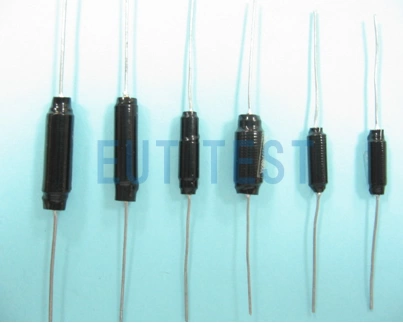
EMC rectification commonly used devices - Part II - Inductors

EMC rectification commonly used devices - Part II - Inductors

This article is the second part of EUTTEST's EMC modification of commonly used devices, mainly introduces the characteristics of inductors, especially at high frequencies and the equivalent circuit, and finally explains in detail the common mode inductors and differential mode inductors ...

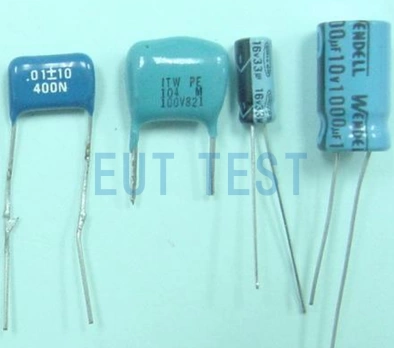
EMC rectification commonly used devices - Part I - capacitors

EMC rectification commonly used devices - Part I - capacitors

This article is the first part of EUTTEST's EMC rectification of commonly used devices, mainly introduces the types of capacitors, characteristics, operating frequency, as well as common X-capacitor and Y-capacitor characteristics of the introduction.

An article on discontinuous disturbance as well as click

An article on discontinuous disturbance as well as click

This paper details the definitions and test methods for intermittent nuisance and clicking, clicking is a type of intermittent nuisance, and explains what counts as clicking, and what equipment does not need to be tested for clicking. Finally, it gives the measurement of clicking sound...

UL1577 Requirements and Differences between Single and Dual Protection Isolators

UL1577 Requirements and Differences between Single and Dual Protection Isolators

UL1577 Requirements and Differences between Single and Dual Protection Isolators,Dual Protection Isolators are required to pass two additional tests compared to Single Protection Isolators.In addition, UL1577 also...

Electromagnetic nuisance coupling mode - conducted and radiated nuisance

Electromagnetic nuisance coupling mode - conducted and radiated nuisance

The coupling mechanism of electromagnetic harassment is usually categorized into two main types: propagation by conducted harassment and propagation by radiated harassment. Electromagnetic harassment propagated through conductors is called conducted harassment; electromagnetic harassment propagated through space is called radiated harassment. Here's how to learn about conducted nuisance...

Understanding Time Domain Signals - Frequency Domain Signals - Modulation Domain Signals in One Article

Understanding Time Domain Signals - Frequency Domain Signals - Modulation Domain Signals in One Article

Time-domain signals record the waveform information of the signal, which can be tested with an oscilloscope; frequency-domain signals record the frequency distribution information of the signal, which can be tested with a spectrometer; modulated signals are divided into analog, digital, noise, and distortion modulated signals.